The Isolation Room Myth: Why Your Best Takes Happen in the Worst Places
The $200K Mistake
The modern professional recording studio was built on a promise: isolate the signal, eliminate the noise, control everything. Acoustic treatment became sacred doctrine. Isolation booths got smaller. Soundproofing got thicker. And somewhere in the last two decades, a lot of engineers started getting worse recordings.
Not because the gear got worse. Because the rooms got too quiet.
The irony is baked into the architecture of high-end studios. You spend six figures treating a room to death—floating the floor, damping the walls, sealing the windows—and what you end up with is a space so dead that every vocal sounds like it's being sung into a pillow. Every drum kit sounds like it's trapped in amber. The room itself has become an enemy to be defeated rather than a collaborator to be understood.
Meanwhile, some of the most consequential recordings of the last decade came from bedrooms, basements, car parks, and one famous case, a bathroom in East London.
When Constraints Beat Options
There's a reason the best home recordings often outperform expensive studio sessions: limitation breeds decision-making. When you have four microphones instead of forty, you start thinking about placement instead of options. When you can't isolate vocals perfectly, you adapt your performance technique. When the room has character—audible reflections, a slight hum, natural reverb—artists often sing differently. Better.
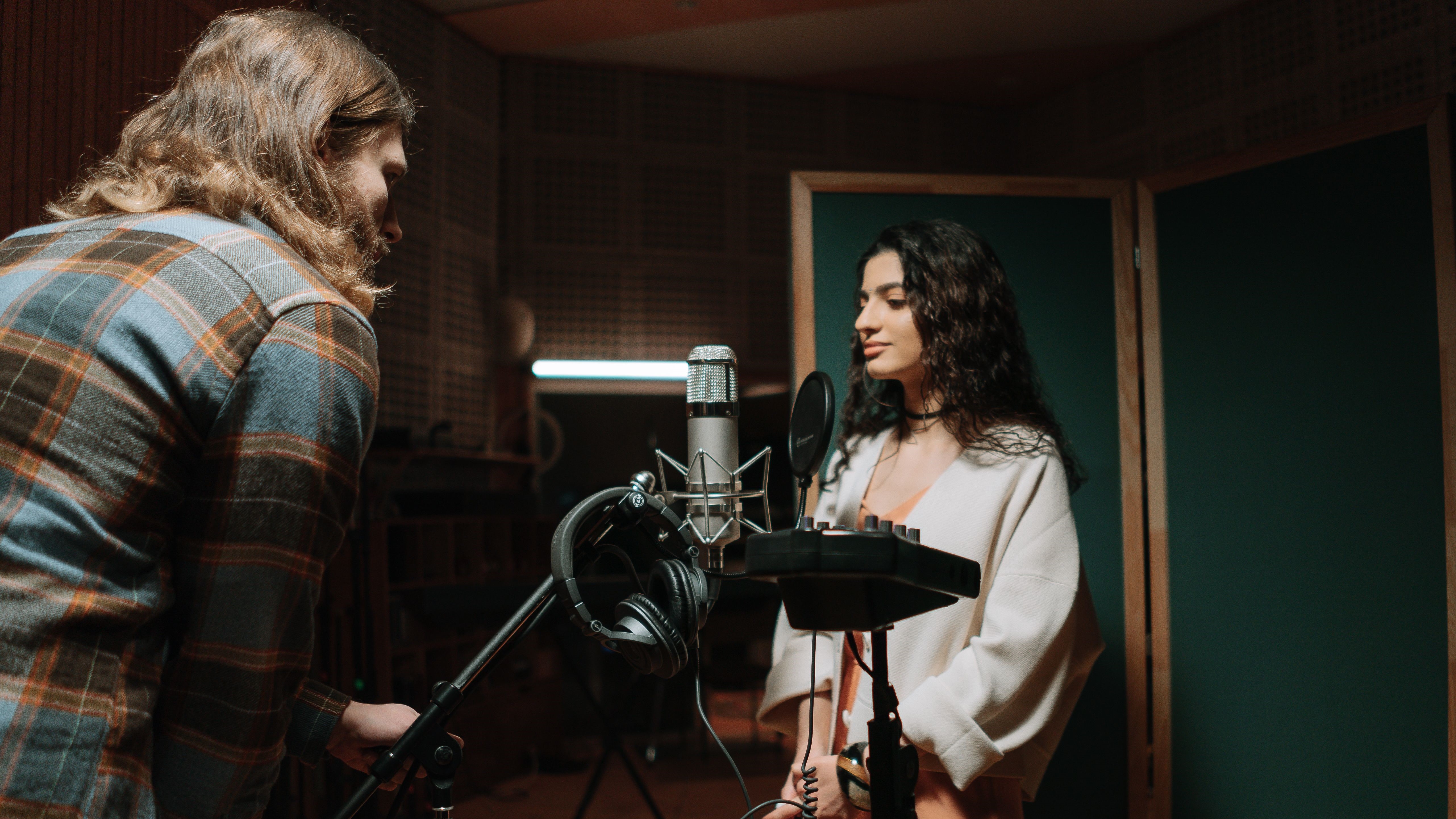
Producers like Jack Antonoff and Danger Mouse have spoken about preferring smaller, less-treated rooms for tracking vocals because the performer can hear themselves in the room. There's feedback, literally. The artist reacts to the space in real time, and that reaction usually tightens the performance.
This isn't nostalgia. It's acoustics. A completely dead room removes spatial cues that humans have been using to navigate sound for thousands of years. Your ear expects some relationship between your voice and the space around it. When that's absent, you overcorrect. You push harder. You second-guess.
Conversely, a room with problems—a slight flutter echo, a corner that rings, ambient street noise—forces you to be more precise. You work within the constraints rather than against them. That constraint often produces better takes.
The Mixing Penalty
Here's what gets hidden in the economics of commercial studios: the cost of over-isolation. A completely dry vocal requires more mixing to sit in a track. You're adding reverb, compression, saturation—essentially rebuilding the spatial properties the room should have provided. That's hours of mixing work that could have been avoided with a better original capture.
Mixing engineers working in top studios have noted this dynamic: vocals recorded in treated-to-death booths often need more moves to sit naturally. Vocals recorded in slightly live rooms often need less. The time saved in mixing sometimes exceeds the time spent in tracking.
And there's a secondary effect: over-treated rooms can sound dated precisely because they're so obviously processed. A vocal from 2008 that was recorded in a dead room and given heavy artificial reverb sounds like 2008. A vocal recorded in a room with natural character ages better because the space itself feels organic.
Why Studios Haven't Adapted
If this is true, why are commercial studios still being built the same way? Partly because of client expectation—people pay for the idea of isolation and control, even if it doesn't deliver better results. Partly because of liability: it's easier to defend a traditional approach than to explain why your $10,000-per-day room is intentionally leaving in some reflections.
And partly because the economics of studio real estate reward specialization over flexibility. A perfectly treated room can be rented to any engineer, any artist, any project. A room with specific acoustic character requires clients who understand what they're paying for.
But the actual work—the recordings that win awards, that go platinum, that define eras—increasingly happens in spaces that break the rulebook. A producer might fly an artist to a $500-a-night Airbnb with a decent mic preamp instead of booking three days at a marquee studio. The results often speak for themselves.
The New Standard
Smart producers and engineers are now designing hybrid spaces: rooms that are moderately treated rather than aggressively isolated. Some natural reflections. Enough control to prevent phase problems. But enough space character to keep performances alive.
If you're investing in your own setup, the lesson is clear: don't chase absolute silence. Chase balance. A good room is one where you can hear what you're making, where the space has some opinion, and where limitations force better creative decisions.
The isolation booth era isn't over. But it's being quietly—or perhaps noisily—overthrown. And the best engineers aren't mourning the loss.