The Rise of AI in the Music Industry
The hype cycle, and the quieter reality underneath it
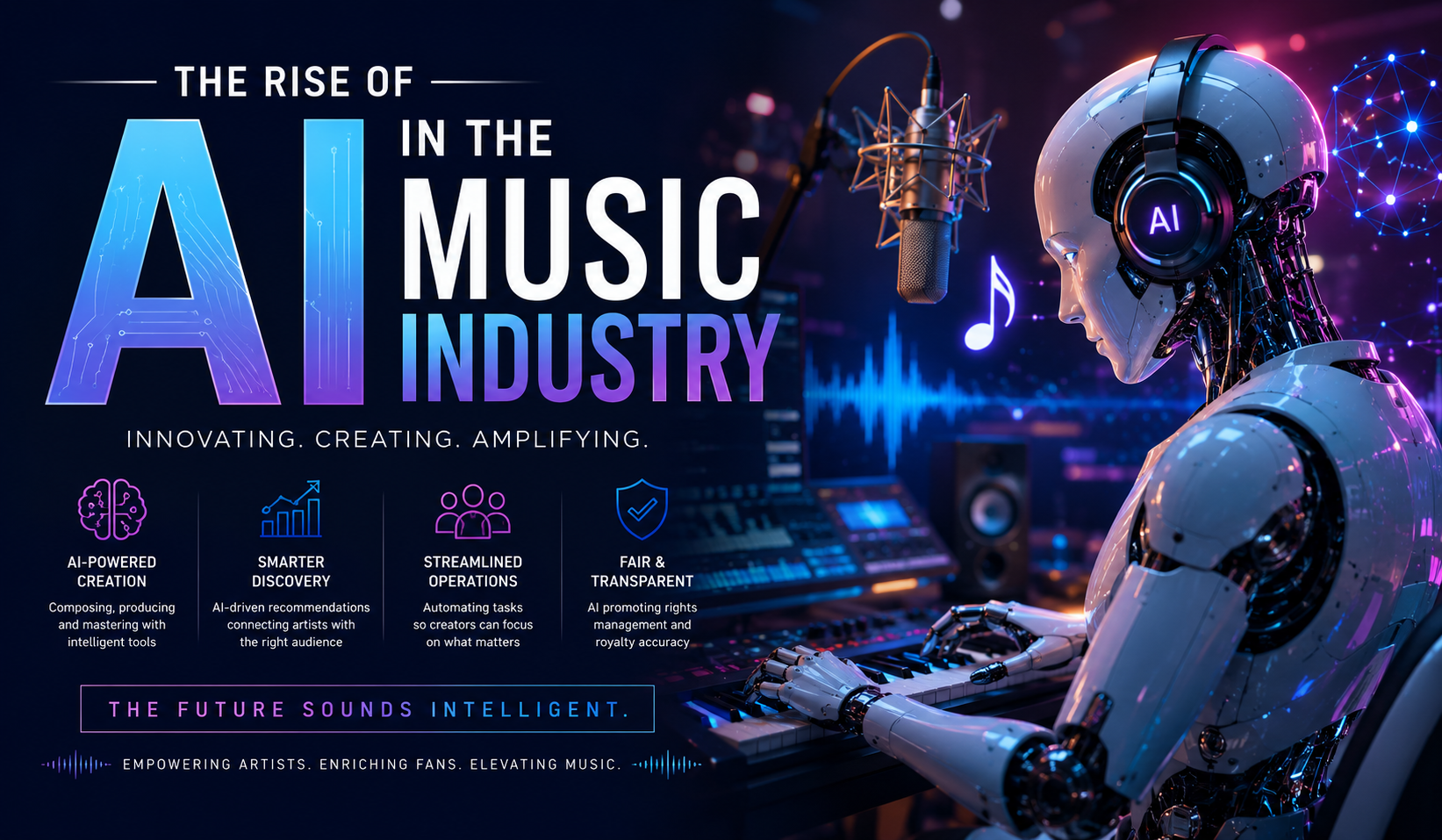
Every few months brings a fresh wave of headlines about AI replacing musicians outright — generating full songs, writing lyrics, mimicking voices. The louder that conversation gets, the easier it is to miss the more useful, less apocalyptic story: AI is already embedded in the unglamorous parts of a working musician's life, and it's making some of that work faster without making the musician optional.
Where AI is genuinely useful today
Mixing and mastering tools now use machine learning to get a rough mix most of the way to release-ready in minutes, which matters most to independent artists who can't afford studio time for every demo. AI-assisted backing tracks and stem separation let a solo performer rehearse against a full-band arrangement, or let a producer pull an isolated vocal from an old recording that would once have required the original session files.
None of this replaces a producer's ear or a musician's phrasing — it compresses the mechanical parts of the process so more time goes toward the parts that actually require a human. Treat these tools the way a photographer treats editing software: useful for getting to a better result faster, not a substitute for having something worth capturing in the first place.
Discovery is where the shift is biggest
The more consequential change for working musicians isn't production — it's discovery. Matching a client's gig requirements to the right artist used to depend entirely on personal networks or generic keyword search. Giglive's AI-assisted gig matching looks at an artist's instrument, genre, location, and experience against what a client actually needs, and surfaces musicians who might never have shown up in a plain text search — including artists earlier in their career who don't yet have the network to get noticed the old-fashioned way.
That's a meaningful shift in who gets found, not just how fast. A well-built profile now competes on relevance, not just reputation.
What AI still can't touch
Live performance is the clearest boundary. A model can generate an approximation of a genre; it cannot read a room, adjust a set list on the fly because the crowd's energy shifted, or lock in with three other musicians who are all reacting to each other in real time. The parts of music that involve presence, improvisation, and human connection remain stubbornly, reassuringly outside what current AI does well — and that's precisely the part clients are paying a live musician to provide.
A practical takeaway
Musicians who treat AI as a tool for the mechanical parts of the job — rough mixes, rehearsal tracks, getting discovered by the right client — tend to come out ahead of both the artists who ignore it entirely and the ones who expect it to do their job for them. The technology is going to keep improving. The advantage still goes to whoever uses it to spend more time on the part only they can do: showing up and playing.